
PROCESSING GRIEF

7 days of release
Great for loss, heartache, PMS, full moon energy or transition times.
GRIEF + THE BREATH
What is grief?
Grief is love that has no where to go. Grief is left over attachment that longs for connection. Grief is the aftermath of traumatic events - which is defined as any event that happened too fast or was too much to process all at once. Grief is the result of a body in fight, flight or freeze after a loss that provided significant safety.
Why does breathwork help with grief?
When we experience stress, loss and grief the first body system to respond is our lungs through our breath. It’s our body’s way of protecting us.
Some researchers suggest that the changes in breath are not just a nervous system response but also a way to keep the emotion or sensation suppressed when it's beyond our capacity to cope. The pathway looks like this:
Traumatic/stressful event…
➜ Fight/flight/freeze response is triggered
➜ Breathing is altered
➜ Emotion and sensation is suppressed
➜ Habitual altered breathing
To heal grief we must reverse this pathway.
How do I know if I have grief or emotions that are suppressed?
Signs you may be stuck in stress (sympathetic nervous system activation):
shallow breathing
restriction or tension in the belly
holding your breath
uncomfortable sensations throughout your body
dissociation from the body
fidgeting or feelings of not being able to relax or wind down
not feeling connected to others
How does breathwork release emotion?
By intentionally altering your breath, you create the internal conditions for your body to engage in it’s natural healing process of releasing and restoring.
Most emotional release breathwork involves engaging a stress response in the body first, perhaps even an altered state of consciousness. This allows the mind to get out of the way and the stored emotions to be accessed. This is important because trauma in the body cannot be healed by simply talking about it or thinking about it - the emotions that are suppressed are stored as physical sensations in the body and must be relived, little by little, in a way that allows the blocked physical sensations attached to the emotions, to be fully expressed and therefore released.
In emotional release breathwork, emotions and sensations may be expressed as laughter, tears, shaking, movement, and anything else that releases the emotional experience from the event that caused the overwhelm.
Breathwork also has the potential to elicit altered states of consciousness, like deep meditation or yoga nidra. In this state, we have the potential to bypass mental stories, projections, judgements, and resistance that prevent us from healing. Breathwork opens the space to allow the body's inner intelligence to emerge and access our own innate wisdom. In altered states of consciousness, we have the potential to process in symbols, metaphors, and sensations that take us deeper than language and rationality. In altered states, we can access our subconscious true feelings without assessing or rationalizing the experience. Meeting the experience in this way allows a much deeper release and integration.
After accessing, processing and releasing suppressed emotions your body will naturally return back to the rest and digest state (parasympathetic nervous system activation). This is usually accompanied by a liberating sense of relief.
It doesn’t mean there is no more grief. It just means there is more room in your body for all emotions and sensations to be experienced and therefore more resilience and freedom alongside the pain - an inevitable companion of love.
How does this challenge work?
Before engaging in the emotional release breathwork (which happens on day 3) - we will first learn techniques to flush excess energy through the lymphatic system and to bring the body back into a state of calm in the face of overwhelming emotions.
The full emotional release practice is intended to bring you release whenever you have the time and space to really dive in and process your pain - you can adjust the timing of this challenge to match your needs.
After that there are additional practices to help with emotional fluidity so that you find less need to store emotions in the first place.
Overall, this is a process of acceptance and allowing. The more we accept and allow all emotions as valid they will cause less resistance or judgment and our capacity for all experiences increases.
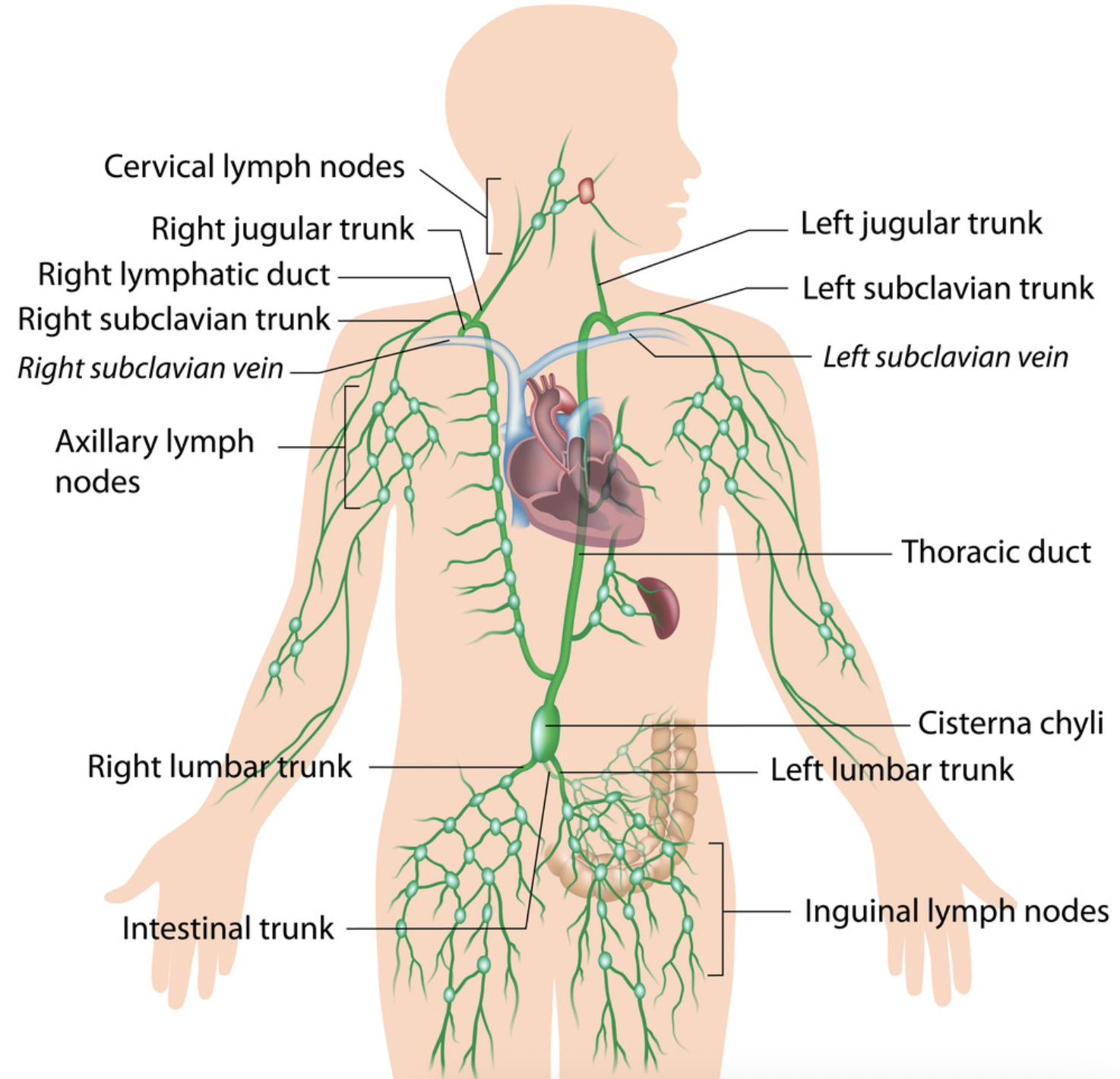
What does the lymphatic system have to do with breathwork?
Lymph fluid moves around the body and collects all the toxins and debris and sends it to the lymph nodes which are like the garbage collectors of our bodies. They filter out all the toxins and debris and decide whether the fluid can be re-used or sent on for elimination. Keeping your lymph nodes clear and flowing at optimal speed is vital for our fluid balance and waste transport capabilities.
According to the field of “esogetics” which is a body-mind therapeutic system in which the body, soul, and spirit are understood to work together, the lymph serves an important psychological function. It operates as a kind of emotional shock absorber or “psychological buffer” system in the body.
How does this work?
According to researcher Peter Mandel, when we experience stress (traumatic or toxic stress in psychological terminology), it is naturally accompanied by a great deal of fear and other negative emotions. Usually, we are unable to fully process these emotions in the moment. Instead, we store them in the subconscious and the emotional memory centers of the brain and cells. Mandel suggests, that these unprocessed emotions, particularly fear, also tend to collect in the lymph system. Whenever the buildup of emotional toxicity becomes too great, this system generates a reaction, such as a fever or a cold. In this way, our lymph helps release or clear emotional toxins from the body. Of course, we do not want lymphatic reactions to progress to this extent if we can help it.
If we can help drain the lymphatic system with deep breathing therefore stimulating the lymph nodes we can help prevent subconscious stress from penetrating deeper into the body. From a spiritual perspective, these reactions are one way that the body helps us process stressful emotional events and move on in life.
So how can we help drain the lymphatic system?
Lymph nodes do not have their own muscular layer, therefore they rely on pressure changes and manual stimulation to empty their contents. This means stimulating the nodes with physical massage, breath or the internal pressure changes that occur from exercise. Everybody has about 500-700 lymph nodes in their entire body, half of them, 200-300 are located in the abdomen. So deep breathing causes the diaphragm to put pressure on the lymph nodes in the abdomen thereby emptying the fluid to be released through the elimination channels of the body.
Sources:
Images: https://finwise.edu.vn/lymph-from-1693638013367466/
https://colorpuncture.org/lymph-psychological-buffer/
Day 1
Diaphragmatic Breathing for Lymphatic Release
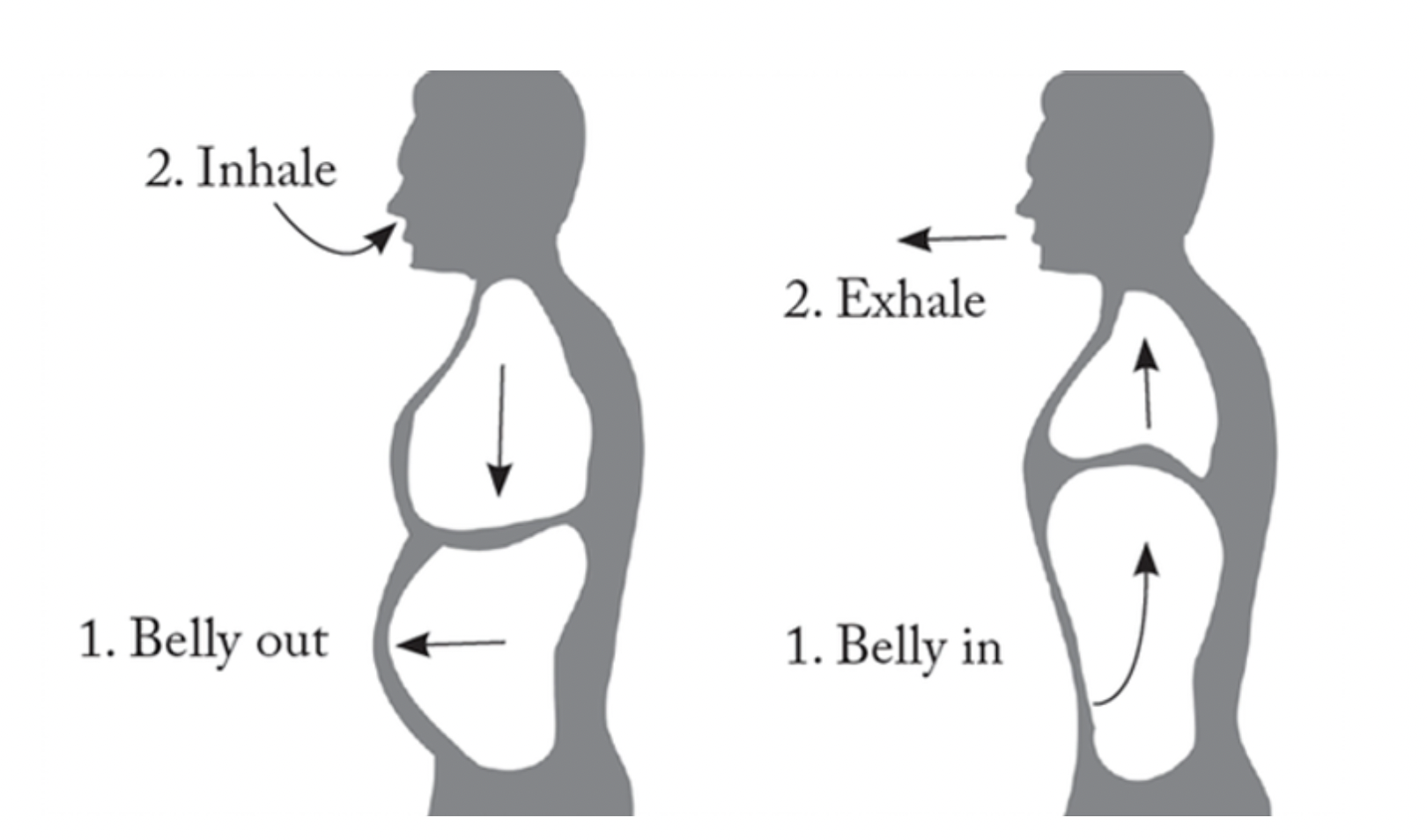
This breathing technique creates space for the diaphragm to lower thereby stimulating the lymph nodes in the abdomen - specifically the cisterna chyli. This allows any excess emotional energy that resides within the lymphatic fluid to be released by lymph nodes.
This practice is about 8 minutes long but can be done for as long or as short as you like anytime you remember throughout the day.
This deep belly breath is actually our natural way of breathing - it’s how babies and children breath and how our body prefers to breath for optimal well being.
Day 2
Parasympathetic Breathing for Nervous System Regulation
Breathing deeply assists the body in activating the parasympathetic nervous system- the rest and digest state. This practice is a quick, trauma informed practice to use at any moment in any scenario - it is not intended to be guided but rather experienced in your own way.
This practice will help you when you are experiencing overwhelming emotions. This is also a safe practice to bring you back to a state of calm if you ever experience overwhelming emotions in any other breathwork practices. Consider this your “reset” breath.
Focus on your breath, inhaling and exhaling whilst imagining the discomfort or overwhelming emotion decreasing with each exhale.
If the sensation or emotion being experienced in one area of the body is too intense, slowly shift your awareness from that area onto a another area. Always, maintain awareness of each body part in focus - keeping awareness reduced overhwelming thoughts.
Closing your eyes, place your left hand on your heart and your right hand on your belly
Breathe in for 4 seconds
Hold for 2 seconds
Exhale for 6 seconds
Repeat 5 times
After your last round, take a long inhale, and as you exhale, you can say the words “I am safe, I am safe, I am safe.”
It doesn’t take much - but it does take practice in order to work. Try to remember this in a heated moment and at the mimimum give yourself a quiet space to take 3 deep breaths with your hands on heart and belly.
Source: Rewire Trauma Therapy
DAy 3
Sympathetic Breathing for Emotional Release
This practice is the best I’ve come across for a gentle yet powerful release. It’s led by MJ Renshaw of the Being Method, an online breathwork certification course.
You must set aside at least 30 minutes for this practice, it is done lying down as comfortable as possible.
It works by engaging the stress response in your body to slightly alter your body’s physiology as well as consciousness. You may experience tears, laughter, tingling or other sensations, which are all normal and not to be judged. It is very gentle so trust your ability to let go and if at any time it is too overwhelming return to the calming breath practice from yesterday.
Day 4
Increasing CO2 Tolerance for Reducing Anxiety
Carbon dioxide tolerance is the body’s ability to handle a temporary imbalance of CO2 and oxygen. The higher your tolerance is, the longer you’ll be able to hold your breath. Our goal is to slightly increase the ability to handle more CO2 - this is not an extreme practice.
We tend to prioritize breathing exercises that help increase oxygen intake but there are actually many benefits to gain from increasing CO2 tolerance.
Why?
Research conducted by Health and Human Performance Foundation found that those with a higher CO2 tolerance had lower in-the-moment anxiety.
CO2 tolerance also helps reduce inflammation because you to hold onto carbon dioxide for longer and therefore there’s more of it available to travel throughout your body and help relieve the inflammation.
FInally, it helps increase energy as you retain more CO2, it helps the mitochondria in your cells to multiply, which increases the amount of energy you have to burn off.
How does it work?
Normally the body maintains a close balance of oxygen to carbon dioxide in the blood giving the blood a stable Ph (this is because carbon dioxide is acidic). When you practise more intense breathwork your body’s balance of carbon dioxide to oxygen temporarily shifts to a lower concentration of carbon dioxide in the blood, causing the body to temporarily become more alkaline. This is great for most practices but to increase Co2 the breathing needs to focus on the exhales and holding the breath rather than on the inhales and increasing the breath.
The practice
Hold your breath gently at the top of the inhale and then hold again at the bottom of the exhale. Hold for just long enough that you feel the need to breathe in building. Make sure all breaths are slow and controlled, through the nose. Repeat for a few minutes or even just a few rounds of breath at any point throughout the day.
Practice slight breath holds while walking - in a way that you’re not stressing yourself out. Practice only breathing through the nose. Breathing through the nose releases nitric oxide, which is necessary to increase carbon dioxide (CO2) in the blood, which, in turn, is what releases oxygen.
If you ever feel dizzy or light headed just return to a normal slow breath. Remember: there’s no right or wrong way to do this practice. This approach is a fluid, feminine approach and the goal is to gradually increase your tolerance to holding your breath. Release the conditioned urge to have the perfect structure or rules for your practice and instead work within the wisdom of your own body.
Day 5
Breathwork for Emotional Fluidity through Feminine Embodiment
This breathwork practice is similar to diaphragmatic breathing but includes your pelvic floor. The intention behind this practice is to use the breath to fully inhabit the whole body.
Often in grief we retreat from the body. When we experience shock, loss, pain or overwhelm the natural response is to shut down to protect ourselves. Doing this saves us from an intensity that could overwhelm us. But overtime, this ability to shut down numbs our good feelings as well and creates bodily tension that leads to more physical pain.
As the body becomes more fluid so do our thoughts and emotions. Our bodies, minds and emotions are meant to move constantly and fluidly. If there is a break in this constant motion we experience restriction. With practice, experiencing our whole body allows emotions to spread out and not be as intense.
As women we hold alot of energy in the pelvic floor so this breathwork opens and engages the whole body and all the energy centres within.
Breathing this way brings us back into our bodies and back into our power, not only for grief processing but also for building confidence.
The practice: The Flower Breath
This is essentially deep belly breathing plus kegels - the flower visualization connects to the kegel exercises.
Begin seated, or standing and relax your whole body.
Inhale, expand your belly and your pelvic floor muscles (like you are going for a pee) and imagine flower petals opening.
Exhale and pull your pelvic muscles up (like a flower closing) and pull your belly in towards your spine.
With practice, try to imagine a fluid transition from opening to closing - breathing in and breathing out.
This practice can be done for just a few breaths (or a few minutes) whenever you remember to bring you back to your feminine, your body and fluidity.
Bonus Somatics:
Tapping the lungs and kidneys - where grief and fear are processed in the body.
While standing, swing your arms side to side tapping the front of your chest and your lower back as you swing. This gently stimulates and frees up the areas where these difficult emotions are more likely to be trapped. Imagine it like a gentle love tap.
Day 6
Breathwork for Clarity
Grief has a way of stripping down your life to what really matters most. In pain or loss there is often a sense of clarity that arises from the ashes of what once was - whether big or small.
This breathwork, alternate nostril breathing will enhance your ability to engage both the right and left hemispheres of your brain for even greater clarity. This is a great practice to do before a reflection practice like journalling since you will be able to bring both your logic and emotional self to the page.
It is also a very grounding breath as it requires your full focus.
DAY 7
Lion’s Breath for Emotional Release
Sometimes you just need to let it out. Lion’s breath is an audible breath out - and making noise is key. The vibration of your vocal chords engages the vagus nerve - the main nerve of the nervous system - and lets your body know you can switch into the parasympathetic nervous system for rest and digest.
This practice is also related to the fifth energy centre within the body, located at the throat and connected to your ability to communicate verbally. Lion's breath can help to unblock this energy centre and allows you to speak your mind and express yourself clearly and confidently.
The Practice:
Inhale deeply, expanding your belly and chest.
Open your mouth, fully extend your tongue and exhale forcefully making a loud sighing sound or a loud humming sound like “Ahhhh”.
Repeat as many times as necessary to feel a release - minimum 3 breaths.
IN CLOSING
Always imagine that you are pouring love back into the open spaces you’ve created after each of these releasing practices.
Fill every single space you can find with love, tenderness and kindness.
Practice feeling gratitude, patience and faith as you close each self care session. ❤️
BONUS PRACTICE
Candles for grief
The symbolism of lighting a candle is often considered a source of guiding light in a place of darkness, which can symbolize the essence of hope in moments of grieving.
This can be a helpful support during your breathwork practice as a way to begin and end the ritual of practice.
It is also a nice acknowledgement to incoporate after ovulation time within the hormone cycle as a way to honour the creative potential of each egg that your body releases.
Journal prompts for processing release
What do I know to be true?
What would my best adult self say to my sweet child self who was having big feelings?
What clarity is this moment bringing?

Adjust your breathing to slow steady breaths if you are pregnant, have epilepsy, high blood pressure, heart disease, or have a history of heart failure, stroke, etc. These practices are in no way medical advice - you must consult your health care provider for individual guidance on what is appropriate for your unique health concerns.
